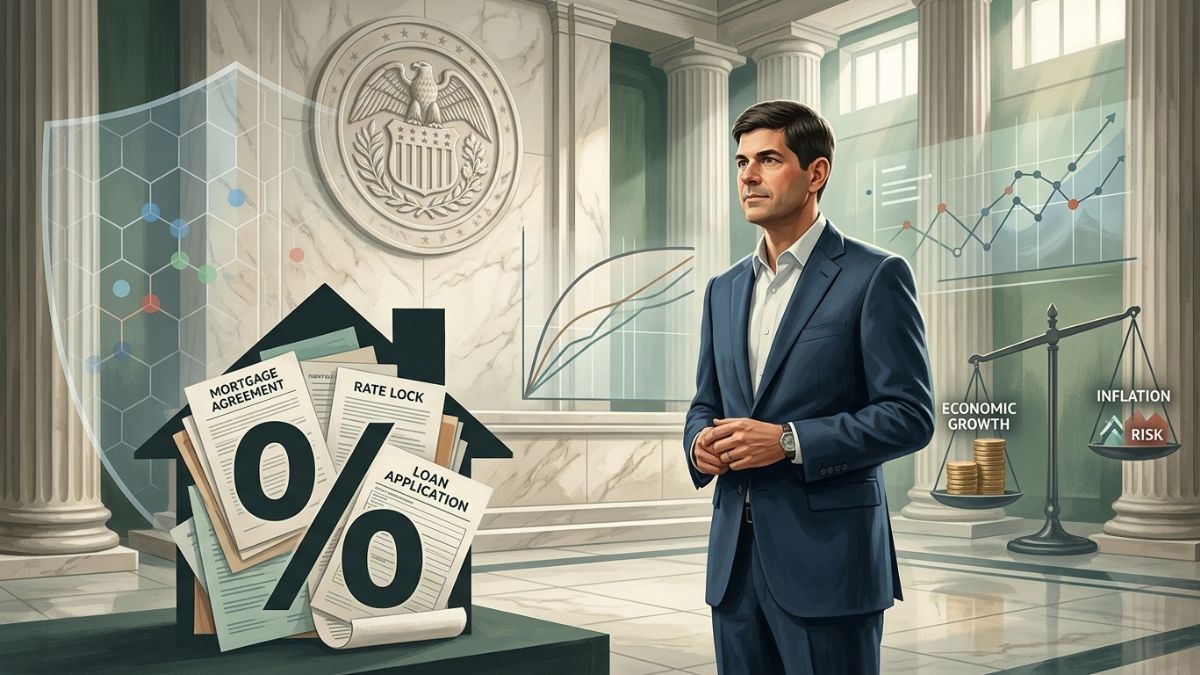
Warsh's Fed Overhaul Introduces New Risks for Mortgage Rates

Edited by Hollis Keystead
Mortgages & Policy · Updated June 19, 2026
Federal Reserve Chair Kevin Warsh's recent changes to the Fed's framework could lead to increased volatility in mortgage rates, impacting the housing market. The adjustments signal a shift in monetary policy that may affect borrowing costs for home buyers and investors alike.
Share this story
Why it matters
- ✓Home buyers may face higher mortgage rates, making home purchases more expensive.
- ✓Sellers could experience a slowdown in the market as potential buyers are deterred by increased borrowing costs.
- ✓Real estate investors may need to reassess their financing strategies in light of potential rate fluctuations.
Warsh's Fed Overhaul Introduces New Risks for Mortgage Rates
The recent changes implemented by Federal Reserve Chair Kevin Warsh are poised to have significant implications for the mortgage industry and the broader housing market. As the Fed adjusts its framework, the potential for increased volatility in mortgage rates becomes a pressing concern for home buyers, sellers, and real estate investors.
Understanding Warsh's New Framework
Kevin Warsh, who has been a prominent figure in economic policy discussions, has introduced a revised approach to how the Federal Reserve manages monetary policy. This new framework emphasizes a more flexible and responsive strategy, which could lead to adjustments in interest rates based on economic indicators and market conditions. While the specifics of these changes are still unfolding, the overarching goal appears to be a more dynamic approach to managing inflation and economic growth.
Implications for Mortgage Rates
One of the most immediate consequences of Warsh's overhaul is the potential for increased volatility in mortgage rates. Historically, mortgage rates have been influenced by the Fed's monetary policy decisions. With a more aggressive stance on rate adjustments, home buyers may find themselves facing fluctuating borrowing costs. This uncertainty can complicate the decision-making process for those looking to purchase homes, as higher rates can significantly impact monthly payments and overall affordability.
Effects on Home Buyers
For home buyers, the prospect of rising mortgage rates is particularly concerning. As rates increase, the cost of borrowing will rise, making home purchases more expensive. This could lead to a decrease in demand for homes, as potential buyers may be priced out of the market. Additionally, buyers may feel pressured to act quickly to secure lower rates before they rise further, which can lead to rushed decisions and potential buyer's remorse.
Impact on Sellers
Sellers may also feel the effects of Warsh's Fed overhaul. If mortgage rates rise, the housing market could experience a slowdown as fewer buyers are able to afford homes. This could lead to longer selling times and potentially lower sale prices, as sellers may need to adjust their expectations in response to decreased demand. The overall market dynamics could shift, making it a more challenging environment for sellers.
Considerations for Real Estate Investors
Real estate investors will need to reassess their strategies in light of the potential for increased mortgage rate volatility. Higher borrowing costs can affect investment returns, making it essential for investors to evaluate their financing options and consider the implications of rising rates on their portfolios. Additionally, investors may need to adjust their property acquisition strategies, focusing on properties that can still generate positive cash flow even in a higher-rate environment.
Conclusion
As the Federal Reserve under Kevin Warsh implements its new framework, the mortgage industry and housing market are likely to face new challenges. Increased volatility in mortgage rates could impact home buyers, sellers, and investors alike, necessitating careful consideration of financial decisions in the coming months. While the full effects of these changes remain to be seen, stakeholders in the real estate market should stay informed and prepared for potential shifts in the economic landscape.
Sources
Newsletter
Your weekly property signal. No spam.
Comments
Log in with
Loading comments…
More in Mortgage

Mortgage Rates May Fall Below 7% by Holiday Season
There is potential for mortgage rates to dip below 7% as the holiday season approaches, according…
1d ago

First Horizon Sells $4.5B Mortgage Portfolio at Discount
First Horizon has sold a significant $4.5 billion mortgage portfolio at a discount as part of its…
2d ago

Mortgage Applications Experience Modest Decline Amid High Rates
Mortgage applications saw a 2.7% decline for the week ending October 9, as mortgage rates remained…
2d ago
Fannie Mae Reduces 2027 Mortgage Forecast Due to Rising Interest Rates
Fannie Mae has revised its mortgage forecast for 2027, primarily due to an anticipated decline in…
2d ago