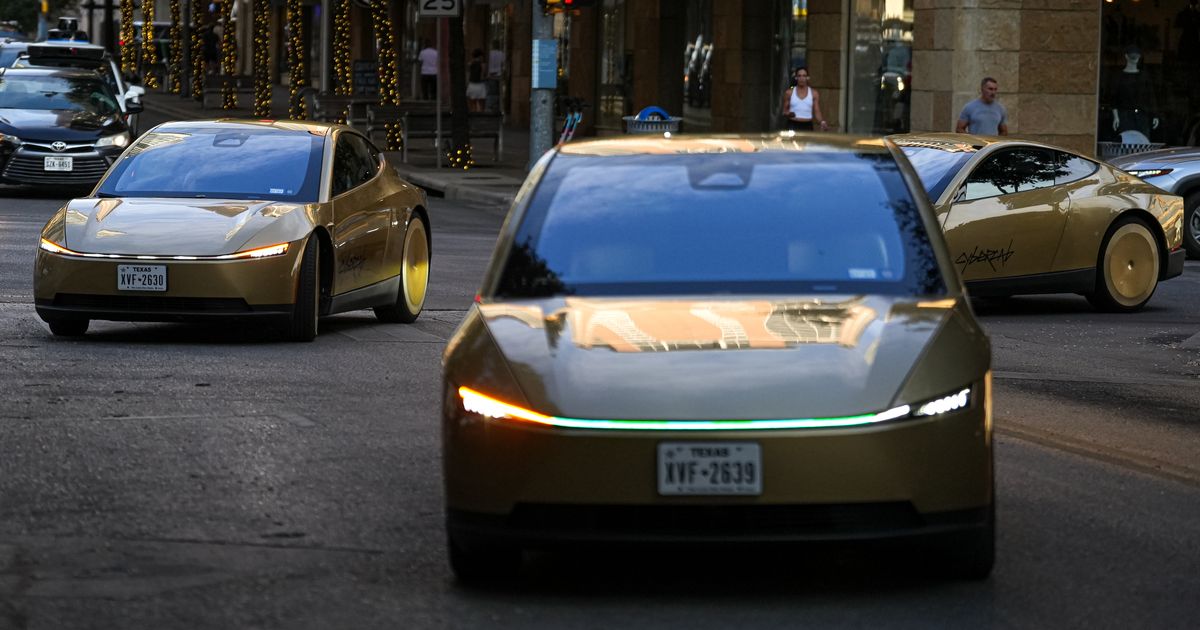
Tesla Cybercabs in New York Feature Human Controls

Edited by Tamsin Gablehart
Markets & Regional · Updated September 15, 2026
Tesla's Cybercabs, which are being tested in New York City, incorporate human controls, distinguishing them from similar pilot programs in other locations where fully autonomous features are utilized. This approach raises questions about the future of self-driving technology in urban environments. As the technology evolves, the implications for urban transportation and real estate dynamics could be significant.
Share this story
Why it matters
- ✓The presence of human controls in Cybercabs may impact the pace of adoption for autonomous vehicles in urban areas, potentially affecting transportation accessibility for home buyers and renters.
- ✓Investors in real estate may need to consider how evolving transportation technologies could influence property values and demand in areas serviced by these vehicles.
- ✓The integration of advanced transportation options like Cybercabs could reshape urban planning and development strategies, affecting future housing projects.
Tesla Cybercabs in New York Feature Human Controls
Tesla's Cybercabs are making headlines as they roll out in New York City, but they come with a significant distinction compared to similar autonomous vehicle pilot programs in other regions. Unlike those programs, which often operate without human intervention, the Cybercabs in New York are equipped with human controls. This development raises important questions about the future of self-driving technology in urban environments and its implications for real estate.
The Role of Human Controls
In many cities where autonomous vehicle technology is being tested, vehicles operate with minimal to no human input. However, the Cybercabs in New York City retain human controls, indicating a cautious approach to the rollout of self-driving technology. This decision may reflect regulatory considerations, public safety concerns, or the complexities of navigating New York's dense urban landscape.
The presence of human controls means that while the vehicles are designed to assist with driving tasks, they are not fully autonomous. This could lead to a slower adoption rate of fully self-driving vehicles in New York compared to other cities where such technology is already being embraced.
Implications for Urban Transportation
The integration of Tesla's Cybercabs into New York City's transportation ecosystem could have several implications:
-
Accessibility: The use of vehicles with human controls may ensure a more reliable transportation option for residents, particularly in areas where public transit is limited. This could enhance mobility for home buyers and renters, making certain neighborhoods more attractive.
-
Investment Opportunities: Real estate investors should consider how the presence of advanced transportation options like Cybercabs could influence property values. Areas that are easily accessible via these vehicles may see increased demand, potentially driving up prices.
-
Urban Planning: As cities explore the integration of autonomous vehicles, urban planners may need to rethink infrastructure and zoning laws. The presence of Cybercabs could lead to changes in how neighborhoods are developed, affecting future housing projects and commercial developments.
Future of Self-Driving Technology
The cautious approach taken by Tesla in New York City may reflect broader challenges faced by the autonomous vehicle industry. Regulatory hurdles, public perception, and technological limitations all play a role in the pace of adoption. As the technology evolves, it will be essential for stakeholders in the real estate market to stay informed about developments in transportation technology and their potential impact on urban living.
Conclusion
Tesla's Cybercabs, while innovative, highlight the complexities of introducing autonomous vehicles into bustling urban environments like New York City. The decision to include human controls may slow the transition to fully autonomous transportation, but it also ensures a level of safety and reliability that could benefit residents and investors alike. As the landscape of urban transportation continues to evolve, so too will the implications for home buyers, sellers, and real estate investors navigating this changing environment.
Sources
Newsletter
Your weekly property signal. No spam.
Comments
Log in with
Loading comments…
More in Regional

Ex-Microsoft Executive Lists $9.75 Million Seattle Estate After Price Cut
A former Microsoft executive has listed his Seattle estate for $9.75 million, following a…
Just now

Historic 1880s Waterfront Social Club Listed for Sale with Significant Price Reduction
The Narragansett Reading Room, a Victorian social club established in the 1880s, has been listed…
Just now

Ritz-Carlton Penthouse on Fort Lauderdale Beach To Be Auctioned to Highest Bidder
A luxurious oceanfront penthouse located in the Ritz-Carlton Residences on Fort Lauderdale Beach is…
6h ago

New Luxury Community Offers Rare Waterfront Living Near the Las Vegas Strip
La Cova, a new luxury community located within the SouthShore Lake Las Vegas in Henderson, NV,…
18h ago