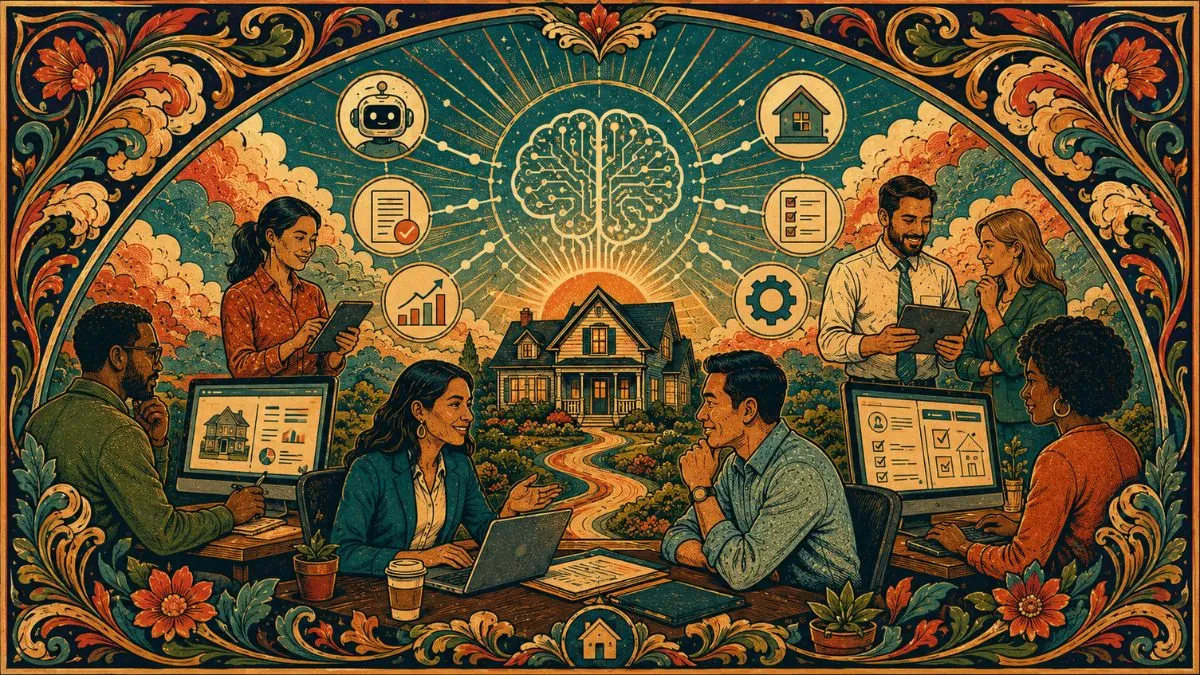
Michael Vandi Discusses the Evolving Role of AI in Mortgage Lending

Edited by Hollis Keystead
Mortgages & Policy · Updated July 14, 2026
Addy AI CEO Michael Vandi highlights the growing adoption of artificial intelligence in the mortgage lending sector. He emphasizes the importance of trust in shaping the future of lending practices and discusses enterprise AI strategies that can enhance operational efficiency. As AI continues to evolve, its impact on the mortgage industry is becoming increasingly significant.
Share this story
Why it matters
- ✓Home buyers may benefit from faster and more efficient mortgage processing due to AI-driven technologies.
- ✓Increased trust in AI systems can lead to more transparent lending practices, enhancing borrower confidence.
- ✓Real estate investors might find improved data analytics capabilities that aid in decision-making and risk assessment.
Michael Vandi Discusses the Evolving Role of AI in Mortgage Lending
In a recent interview with HousingWire, Michael Vandi, CEO of Addy AI, shared insights into the transformative role of artificial intelligence (AI) in the mortgage lending industry. As AI technology continues to advance, its adoption within the sector is shifting from mere curiosity to a fundamental operational strategy. Vandi's perspective sheds light on how trust and enterprise AI strategies are shaping the future of lending.
The Shift from Curiosity to Adoption
Historically, the mortgage industry has been cautious about embracing new technologies, particularly AI. However, Vandi notes that this attitude is changing. Lenders are increasingly recognizing the potential of AI to streamline processes, reduce costs, and enhance customer experiences. The transition from curiosity to operational transformation signifies a critical moment for the industry, as more companies begin to integrate AI into their workflows.
Trust as a Cornerstone of AI Implementation
One of the key themes in Vandi's discussion is the importance of trust in AI systems. For lenders to fully leverage AI technologies, they must ensure that these systems are reliable and transparent. This trust is essential not only for the lenders themselves but also for the borrowers who rely on these technologies for their mortgage applications. Vandi emphasizes that building trust involves demonstrating the efficacy and fairness of AI algorithms, which can help alleviate concerns about bias and discrimination in lending practices.
Enterprise AI Strategies
Vandi also delves into the concept of enterprise AI strategies, which involve integrating AI across various functions within a mortgage lending organization. This holistic approach can lead to significant operational efficiencies. For example, AI can be used to automate repetitive tasks, analyze vast amounts of data for better decision-making, and enhance customer service through chatbots and virtual assistants. By adopting these strategies, lenders can not only improve their internal processes but also provide a better experience for their clients.
Implications for Home Buyers and Investors
The evolving relationship between AI and mortgage lending has several implications for home buyers and real estate investors.
Enhanced Efficiency
For home buyers, the integration of AI into mortgage processes can lead to faster approvals and streamlined applications. This efficiency can be particularly beneficial in competitive housing markets where time is of the essence.
Increased Transparency
As lenders adopt AI technologies that prioritize trust and transparency, borrowers may feel more confident in the lending process. This can foster a more positive relationship between lenders and borrowers, ultimately benefiting the overall market.
Data-Driven Insights for Investors
Real estate investors can leverage AI-driven analytics to gain deeper insights into market trends, property values, and risk assessments. This data can inform investment strategies and help investors make more informed decisions.
Conclusion
Michael Vandi's insights into the evolving role of AI in mortgage lending highlight a significant shift in the industry. As lenders embrace AI technologies and prioritize trust, the potential benefits for home buyers and investors are substantial. The future of mortgage lending appears to be increasingly intertwined with AI, promising a more efficient, transparent, and data-driven landscape. As this transformation unfolds, stakeholders across the real estate spectrum will need to adapt to the new realities shaped by these advancements.
Sources
Newsletter
Your weekly property signal. No spam.
Comments
Log in with
Loading comments…
More in Mortgage

Mortgage Rates May Fall Below 7% by Holiday Season
There is potential for mortgage rates to dip below 7% as the holiday season approaches, according…
1d ago

First Horizon Sells $4.5B Mortgage Portfolio at Discount
First Horizon has sold a significant $4.5 billion mortgage portfolio at a discount as part of its…
2d ago

Mortgage Applications Experience Modest Decline Amid High Rates
Mortgage applications saw a 2.7% decline for the week ending October 9, as mortgage rates remained…
2d ago
Fannie Mae Reduces 2027 Mortgage Forecast Due to Rising Interest Rates
Fannie Mae has revised its mortgage forecast for 2027, primarily due to an anticipated decline in…
2d ago