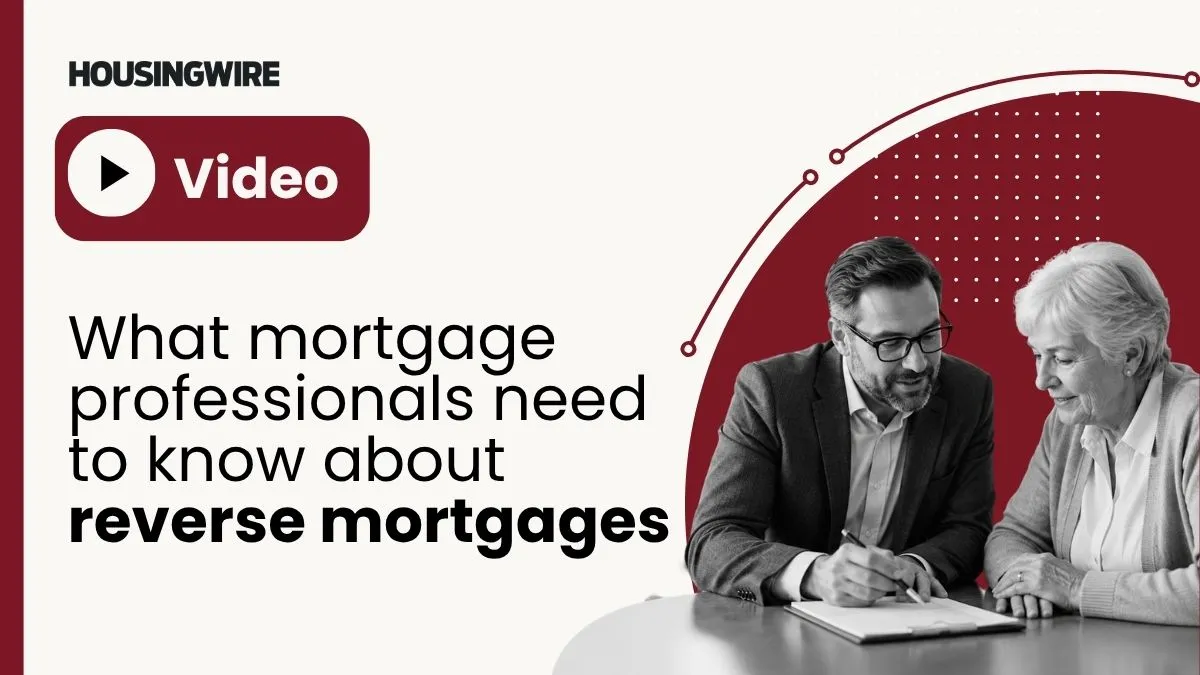
Key Insights for Mortgage Professionals on Reverse Mortgages

Edited by Hollis Keystead
Mortgages & Policy · Updated June 16, 2026
Mortgage professionals are increasingly recognizing the importance of reverse mortgages, reverse second liens, and housing wealth strategies in serving senior homeowners. Finance of America highlights how these financial products can provide valuable solutions for older adults looking to leverage their home equity. Understanding these options can enhance the service offerings of mortgage originators in today's market.
Share this story
Why it matters
- ✓Reverse mortgages can provide seniors with additional income, impacting their financial stability and housing decisions.
- ✓Mortgage professionals equipped with knowledge about reverse mortgages can better assist clients in making informed choices regarding their home equity.
- ✓Investors may find opportunities in properties owned by seniors who are utilizing these financial products.
Understanding Reverse Mortgages: A Guide for Mortgage Professionals
As the demographic landscape shifts and the population of senior homeowners grows, mortgage professionals must adapt to the evolving needs of this market segment. One significant financial product that has gained traction is the reverse mortgage. This article explores what mortgage professionals need to know about reverse mortgages, reverse second liens, and housing wealth strategies, as highlighted by Finance of America.
What is a Reverse Mortgage?
A reverse mortgage is a financial product that allows homeowners, typically aged 62 and older, to convert a portion of their home equity into cash. Unlike traditional mortgages, where homeowners make monthly payments to a lender, reverse mortgages allow seniors to receive payments from the lender. This can provide much-needed income to help cover living expenses, healthcare costs, or other financial needs.
Types of Reverse Mortgages
There are several types of reverse mortgages, including:
- Home Equity Conversion Mortgages (HECMs): These are federally insured reverse mortgages that are the most common type.
- Proprietary Reverse Mortgages: These are private loans that are not insured by the federal government and may offer larger loan amounts.
- Reverse Second Liens: This type allows homeowners to take out a second lien against their property, providing additional funds while still maintaining their first mortgage.
The Role of Housing Wealth Strategies
Housing wealth strategies involve utilizing home equity to improve financial stability and quality of life for seniors. Mortgage professionals should be familiar with these strategies, as they can help clients make informed decisions about leveraging their home equity. For example, a reverse mortgage can be part of a broader financial plan that includes retirement income, long-term care funding, and estate planning.
Benefits of Reverse Mortgages for Seniors
Reverse mortgages offer several benefits for senior homeowners:
- Increased Cash Flow: Seniors can access cash without having to sell their homes, allowing them to maintain their living situation while improving their financial flexibility.
- No Monthly Payments: Unlike traditional loans, reverse mortgages do not require monthly payments, which can ease financial pressure on retirees.
- Home Ownership Retained: Seniors retain ownership of their homes, and the loan is repaid only when they sell the home, move out, or pass away.
Implications for Mortgage Professionals
Understanding reverse mortgages is crucial for mortgage professionals for several reasons:
- Meeting Client Needs: As the population ages, more clients will seek options to access their home equity. Professionals who are knowledgeable about reverse mortgages can better serve these clients.
- Expanding Service Offerings: By incorporating reverse mortgages into their service offerings, mortgage professionals can differentiate themselves in a competitive market.
- Navigating Complex Regulations: Reverse mortgages come with specific regulations and guidelines. Professionals must stay informed to ensure compliance and provide accurate advice to clients.
Conclusion
As the market for reverse mortgages continues to grow, mortgage professionals must equip themselves with the knowledge and tools to assist senior homeowners effectively. By understanding the intricacies of reverse mortgages, reverse second liens, and housing wealth strategies, mortgage professionals can enhance their service offerings and better meet the needs of an aging population. This not only benefits clients but also positions mortgage professionals as trusted advisors in the evolving real estate landscape.
Sources
Newsletter
Your weekly property signal. No spam.
Comments
Log in with
Loading comments…
More in Mortgage

Mortgage Rates May Fall Below 7% by Holiday Season
There is potential for mortgage rates to dip below 7% as the holiday season approaches, according…
1d ago

First Horizon Sells $4.5B Mortgage Portfolio at Discount
First Horizon has sold a significant $4.5 billion mortgage portfolio at a discount as part of its…
2d ago
Mortgage Applications Experience Modest Decline Amid High Rates
Mortgage applications saw a 2.7% decline for the week ending October 9, as mortgage rates remained…
2d ago
Fannie Mae Reduces 2027 Mortgage Forecast Due to Rising Interest Rates
Fannie Mae has revised its mortgage forecast for 2027, primarily due to an anticipated decline in…
2d ago