Fortress Columbia: A Look at Security and Public Space Two Years Later

Edited by Tamsin Gablehart
Markets & Regional · Updated August 27, 2026
Two years after Columbia University closed its gates in response to a crisis, the institution is now facing new challenges related to security and public access. The decision to lock the gates has sparked discussions about the balance between safety and community engagement in urban spaces. As the university navigates these issues, the implications for nearby neighborhoods and real estate dynamics are becoming increasingly relevant.
Share this story
Why it matters
- ✓Changes in security measures at Columbia University can impact the desirability of nearby neighborhoods for home buyers and investors.
- ✓Public access to university spaces affects local businesses and community interactions, which can influence property values.
- ✓Real estate investors should monitor how university policies evolve, as they can affect demand for housing in the area.
Fortress Columbia: A Look at Security and Public Space Two Years Later
Introduction
Two years ago, Columbia University made the controversial decision to close its gates in response to a crisis that raised concerns about safety and security on campus. This move, while intended to protect students and faculty, has led to ongoing discussions about the implications of restricted access to public spaces in urban environments. As the university now seeks to navigate the fallout from this decision, the impact on surrounding neighborhoods and real estate dynamics is becoming increasingly significant.
The Closure of Gates: A Response to Crisis
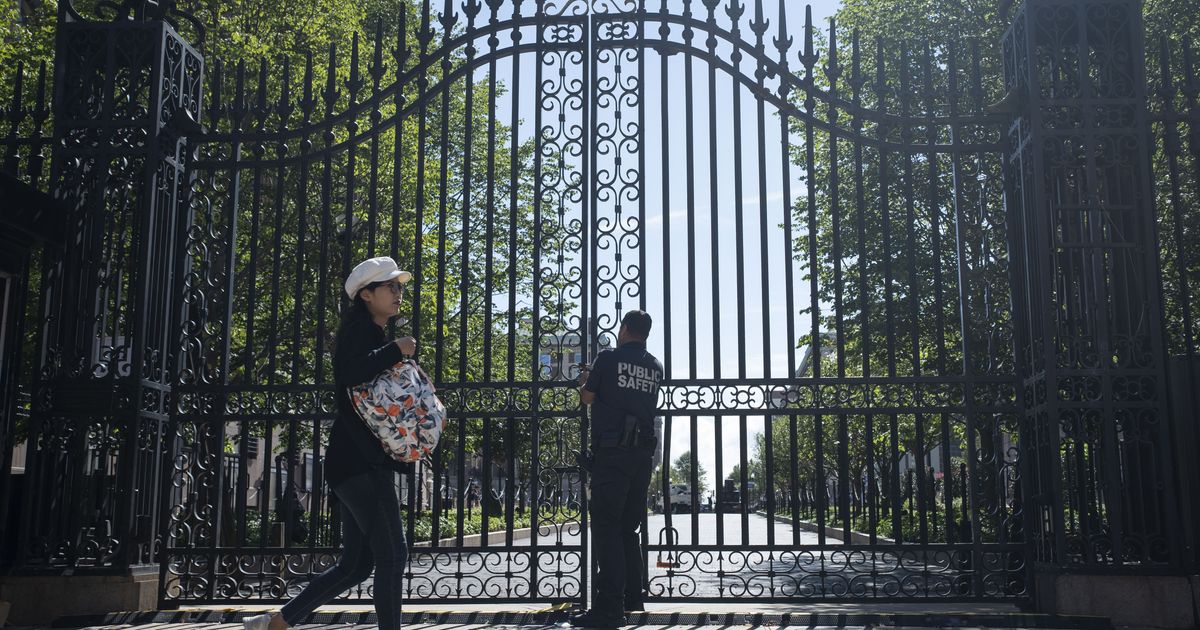
In the wake of heightened security concerns, Columbia University opted to lock its gates, effectively limiting public access to its campus. This decision was made during a time of crisis, reflecting a broader trend among educational institutions to prioritize safety. However, the closure has not only affected the university community but has also raised questions about the relationship between educational institutions and their surrounding neighborhoods.
Community Reaction and Ongoing Challenges
The closure of the gates has sparked mixed reactions from the community. While some residents understand the necessity of enhanced security measures, others express concern over the loss of public space and the implications for community engagement. The university's decision to restrict access has led to a sense of isolation for some local residents who previously enjoyed the open campus as a communal space.
As Columbia University seeks to address these concerns, it is also courting a new crisis. The challenge lies in balancing the need for security with the desire for community interaction and public access. The university's administration is now tasked with finding solutions that can satisfy both safety requirements and the community's need for open spaces.
Implications for Real Estate and Home Buyers
The changes in security measures at Columbia University can have a direct impact on the surrounding real estate market. For home buyers and investors, the desirability of neighborhoods adjacent to the university may fluctuate based on perceptions of safety and accessibility. Areas that were once seen as vibrant and community-oriented may experience shifts in demand if public access remains restricted.
Furthermore, local businesses that rely on foot traffic from students and faculty may also feel the effects of the university's policies. A decline in community engagement could lead to decreased patronage, impacting the economic vitality of the area. Investors should be aware of these dynamics as they evaluate potential properties in the vicinity of the university.
The Future of Public Space at Columbia
As Columbia University moves forward, the future of public space on its campus remains uncertain. The administration's efforts to engage with the community and address concerns about security will be crucial in shaping the relationship between the university and its neighbors. Open dialogue and collaboration may help to restore a sense of community while ensuring that safety remains a priority.
In conclusion, the situation at Columbia University serves as a case study in the complexities of urban security and public access. For home buyers and investors, understanding these dynamics will be essential in navigating the real estate landscape in the area. As the university continues to evolve its policies, the implications for surrounding neighborhoods will undoubtedly unfold, making it a critical issue for those involved in the local real estate market.
Sources
- Fortress Columbia, Two Years Later — Curbed
Newsletter
Your weekly property signal. No spam.
Comments
Log in with
Loading comments…
More in Regional

Ex-Microsoft Executive Lists $9.75 Million Seattle Estate After Price Cut
A former Microsoft executive has listed his Seattle estate for $9.75 million, following a…
15h ago

Historic 1880s Waterfront Social Club Listed for Sale with Significant Price Reduction
The Narragansett Reading Room, a Victorian social club established in the 1880s, has been listed…
15h ago

Ritz-Carlton Penthouse on Fort Lauderdale Beach To Be Auctioned to Highest Bidder
A luxurious oceanfront penthouse located in the Ritz-Carlton Residences on Fort Lauderdale Beach is…
21h ago

New Luxury Community Offers Rare Waterfront Living Near the Las Vegas Strip
La Cova, a new luxury community located within the SouthShore Lake Las Vegas in Henderson, NV,…
1d ago