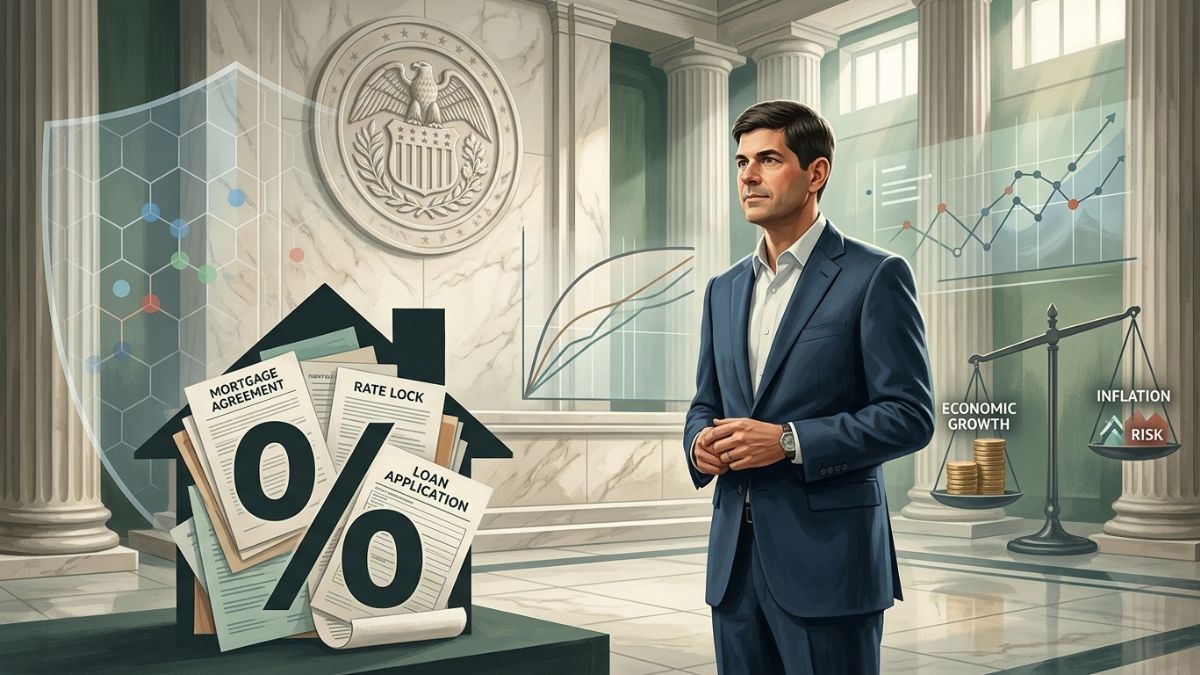
Fed Chair Warsh Signals Potential Rate Hike Amid Economic Data Concerns

Edited by Hollis Keystead
Mortgages & Policy · Updated August 28, 2026
Federal Reserve Chair Kevin Warsh has indicated that he will support raising interest rates if economic data does not show improvement. This statement highlights the Fed's ongoing assessment of economic conditions and its readiness to adjust monetary policy accordingly. The focus remains on key economic indicators that could influence future decisions regarding interest rates.
Share this story
Why it matters
- ✓Higher interest rates could lead to increased mortgage costs for home buyers, making home purchases less affordable.
- ✓Sellers may face challenges in a higher-rate environment as potential buyers may be priced out of the market.
- ✓Real estate investors could see changes in investment strategies as borrowing costs rise, impacting property acquisition and financing.
Fed Chair Warsh Signals Potential Rate Hike Amid Economic Data Concerns
Federal Reserve Chair Kevin Warsh has recently made headlines with his comments regarding interest rates and the current economic landscape. As the Fed continues to navigate the complexities of the economy, Warsh's statements provide insight into potential future monetary policy decisions that could significantly impact the housing market.
Warsh's Position on Interest Rates
In a recent speech, Warsh emphasized that he is prepared to vote for an increase in interest rates if the economic data does not show signs of improvement. This statement underscores the Fed's commitment to responding proactively to economic indicators, which are crucial in shaping monetary policy. Warsh's readiness to support a rate hike reflects a cautious approach to managing inflation and economic growth.
The Importance of Economic Data
Warsh's comments highlight the critical role that economic data plays in the Fed's decision-making process. Key indicators such as employment rates, inflation metrics, and consumer spending are closely monitored by the Federal Reserve. If these indicators suggest a weakening economy or persistently high inflation, the Fed may opt to raise interest rates to curb inflationary pressures.
Implications for Home Buyers
For home buyers, the prospect of rising interest rates can have significant implications. Higher rates typically translate to increased borrowing costs, which can make mortgages more expensive. As a result, potential buyers may find themselves priced out of the market, leading to decreased demand for homes. This could slow down the housing market and potentially lead to a stabilization of home prices, which have seen rapid increases in recent years.
Challenges for Sellers
Sellers may also face challenges in a higher interest rate environment. With fewer buyers able to afford homes due to increased mortgage costs, sellers may need to adjust their pricing strategies. Homes may take longer to sell, and sellers might have to consider lowering their asking prices to attract buyers. This shift could lead to a more balanced market, where sellers have to compete more aggressively for buyers.
Impact on Real Estate Investors
Real estate investors are likely to reevaluate their strategies in light of potential interest rate hikes. Increased borrowing costs can affect the profitability of investment properties, leading investors to reconsider financing options or the types of properties they pursue. Investors may also need to factor in the potential for slower market growth, which could impact their return on investment.
Conclusion
As the Federal Reserve continues to assess economic conditions, Warsh's indication of a willingness to raise interest rates serves as a reminder of the interconnectedness of monetary policy and the housing market. Home buyers, sellers, and real estate investors should remain vigilant and informed about economic data trends, as these will play a crucial role in shaping the future of the real estate landscape. With the Fed's focus on data-driven decision-making, the coming months could bring significant changes to the market dynamics.
Sources
Newsletter
Your weekly property signal. No spam.
Comments
Log in with
Loading comments…
More in Policy

Voters Influence Housing Affordability Measures in Key States
Voters in California and other states are actively participating in housing reform by casting…
14h ago

Understanding Amendment 3: Key Insights for Florida Homeowners
Amendment 3 aims to provide property tax relief to eligible homeowners in Florida. The proposal is…
1d ago
Understanding Amendment 3: Property Tax Relief for Florida Homeowners
Amendment 3 is a proposed measure aimed at providing property tax relief to eligible homeowners in…
2d ago

Compass Sues CRMLS Over Cooperation Rules and Agent Fines
Compass has initiated a legal battle against the California Regional Multiple Listing Service…
2d ago