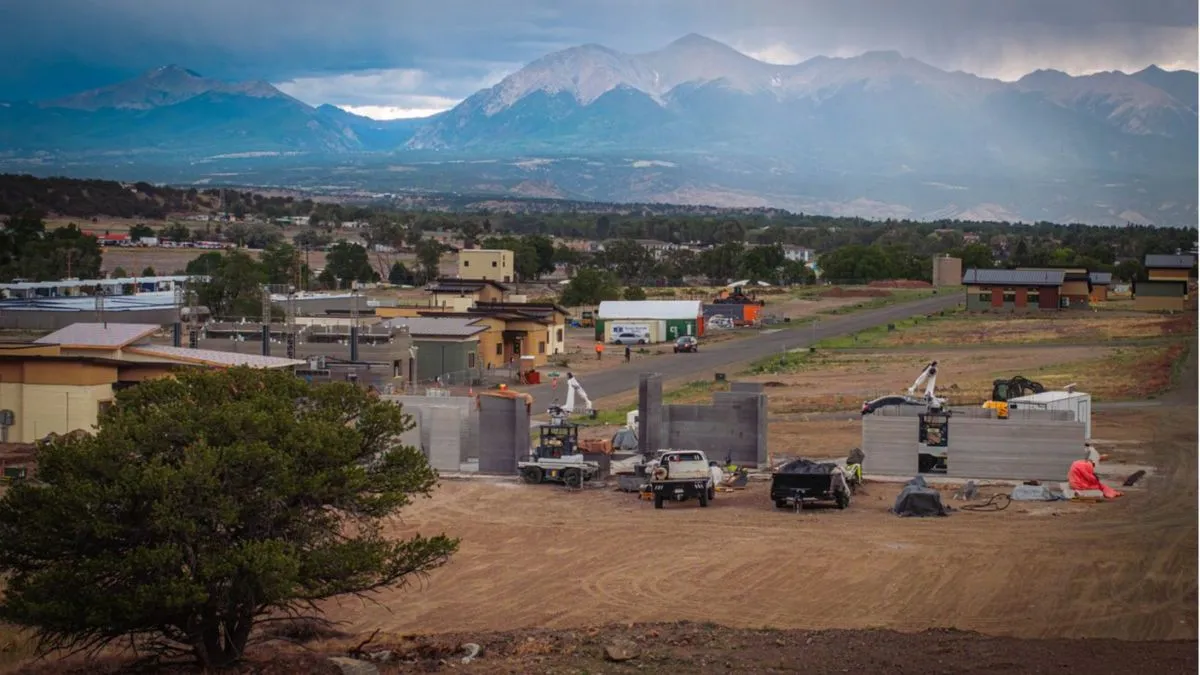
Colorado Project Pioneers 3D-Printed Homes

Edited by Tamsin Gablehart
Markets & Regional · Updated July 10, 2026
In Cleora, near Salida, Colorado, a new project is underway to construct 106 homes using 3D printing technology. This initiative aims to leverage robotics to enhance the speed, resilience, and labor efficiency of home construction, potentially transforming the housing landscape in the region.
Share this story
Why it matters
- ✓The use of 3D printing in home construction could lead to faster building times, addressing housing shortages more efficiently.
- ✓Increased labor efficiency may reduce construction costs, potentially lowering home prices for buyers.
- ✓Investors may find new opportunities in innovative construction methods that promise sustainability and resilience.
Colorado Project Pioneers 3D-Printed Homes
Introduction
In an innovative move towards modern housing solutions, a project in Cleora, near Salida, Colorado, is set to construct 106 homes utilizing 3D printing technology. This initiative is not just about building homes; it represents a significant shift in how we approach residential construction, aiming to improve efficiency and sustainability in the housing market.
The Project Overview
The Cleora project is leveraging advanced robotics to facilitate the construction of these homes. By employing 3D printing techniques, the project aims to enhance several critical aspects of home building, including speed, resilience, and labor efficiency. The use of robotics in construction is expected to streamline processes that traditionally require extensive manual labor, potentially leading to quicker completion times for new homes.
Benefits of 3D-Printed Homes
Speed of Construction
One of the most significant advantages of 3D printing in home construction is the speed at which homes can be built. Traditional construction methods can be time-consuming, often taking months or even years to complete a single home. In contrast, 3D printing can significantly reduce this timeline, allowing homes to be constructed in a matter of weeks. This rapid construction capability could help alleviate housing shortages in areas like Colorado, where demand for affordable housing continues to rise.
Resilience and Sustainability
3D-printed homes are not only faster to build but also offer potential benefits in terms of resilience and sustainability. The materials used in 3D printing can be designed to withstand various environmental challenges, making these homes more durable. Additionally, the construction process can minimize waste, aligning with growing demands for sustainable building practices in the real estate sector.
Labor Efficiency
By integrating robotics into the construction process, the Cleora project aims to improve labor efficiency. This could address some of the labor shortages currently faced in the construction industry, where skilled labor is often in short supply. With fewer workers needed on-site, the project may also reduce labor costs, which could translate to lower prices for home buyers.
Implications for Home Buyers and Investors
The implications of this project extend beyond just the immediate construction of homes. For home buyers, the potential for faster and more affordable housing options could be a game-changer, particularly in a market where housing prices have been on the rise. If 3D printing proves to be a viable and scalable solution, it could lead to a significant shift in how homes are priced and built across the country.
For real estate investors, the Cleora project represents an opportunity to engage with innovative construction methods that could redefine the market. As the demand for sustainable and efficient housing grows, investors who are early adopters of these technologies may find themselves at a competitive advantage.
Conclusion
The Cleora project in Colorado is a promising step towards the future of home construction. By utilizing 3D printing technology, it aims to address critical issues in the housing market, including speed, cost, and sustainability. As this project unfolds, it will be essential to monitor its progress and the broader implications for home buyers, sellers, and investors in the real estate landscape. The success of this initiative could pave the way for more widespread adoption of 3D-printed homes, potentially transforming the industry for years to come.
Sources
Newsletter
Your weekly property signal. No spam.
Comments
Log in with
Loading comments…
More in Regional

Ex-Microsoft Executive Lists $9.75 Million Seattle Estate After Price Cut
A former Microsoft executive has listed his Seattle estate for $9.75 million, following a…
14h ago

Historic 1880s Waterfront Social Club Listed for Sale with Significant Price Reduction
The Narragansett Reading Room, a Victorian social club established in the 1880s, has been listed…
14h ago

Ritz-Carlton Penthouse on Fort Lauderdale Beach To Be Auctioned to Highest Bidder
A luxurious oceanfront penthouse located in the Ritz-Carlton Residences on Fort Lauderdale Beach is…
20h ago

New Luxury Community Offers Rare Waterfront Living Near the Las Vegas Strip
La Cova, a new luxury community located within the SouthShore Lake Las Vegas in Henderson, NV,…
1d ago