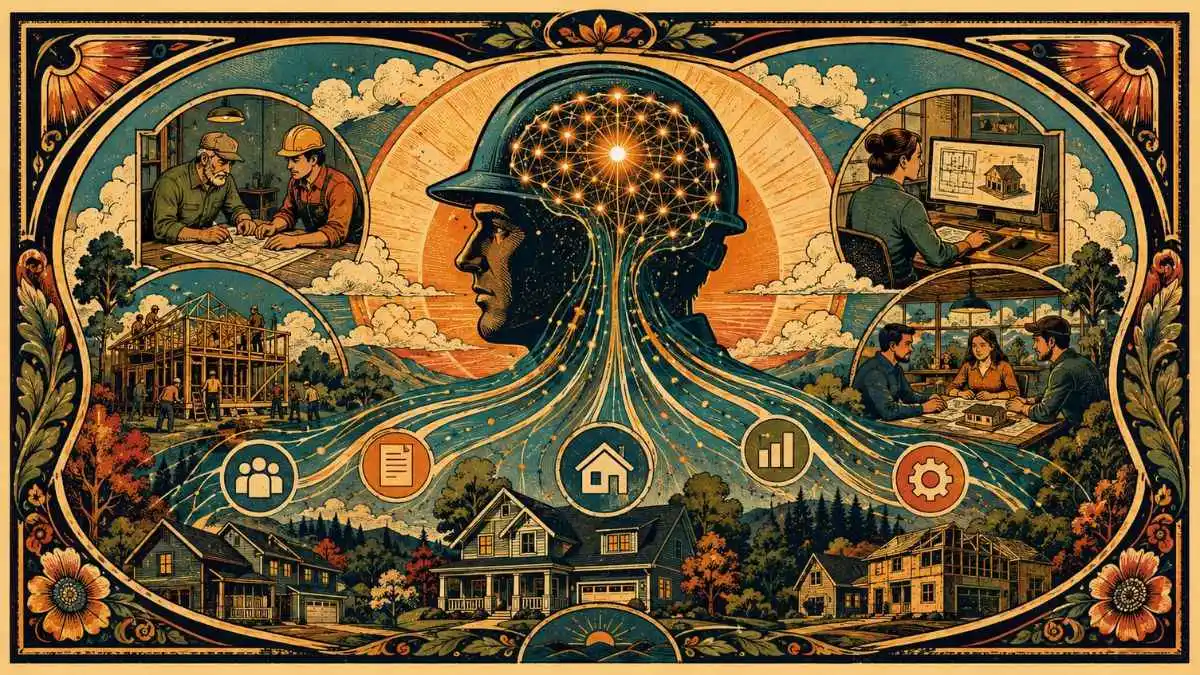
AI Enhancements in Home Building: Leveraging Institutional Knowledge

Edited by Tamsin Gablehart
Markets & Regional · Updated July 8, 2026
New Home Star highlights the integration of connected buyer data, builder CRM strategies, and artificial intelligence (AI) in the construction industry. These advancements are enabling builders to enhance their sales and marketing efforts while improving their speed-to-lead. The focus on institutional knowledge is becoming increasingly vital for builders to remain competitive in the market.
Share this story
Why it matters
- ✓Home buyers can benefit from more personalized and efficient interactions with builders, leading to better service and potentially faster home purchasing processes.
- ✓Sellers and real estate investors may see improved market dynamics as builders leverage AI to optimize inventory management and sales strategies.
- ✓The emphasis on institutional knowledge may lead to more informed decision-making in the industry, ultimately affecting pricing and availability of new homes.
The AI Edge for Builders: Leveraging Institutional Knowledge
The construction industry is undergoing a significant transformation as builders increasingly turn to artificial intelligence (AI) and data-driven strategies to enhance their operations. According to insights from New Home Star, the integration of connected buyer data, builder customer relationship management (CRM) strategies, and AI technologies is reshaping how builders approach sales and marketing. This shift not only improves efficiency but also emphasizes the importance of institutional knowledge as a key asset in the industry.
Understanding the Role of AI in Home Building
AI technologies are becoming essential tools for builders, enabling them to analyze vast amounts of data related to buyer behavior and preferences. By utilizing connected buyer data, builders can gain insights into what potential home buyers are looking for, allowing them to tailor their offerings more effectively. This data-driven approach helps builders identify trends and make informed decisions about marketing strategies and inventory management.
Enhancing Sales and Marketing Efforts
One of the primary benefits of integrating AI into the home building process is the enhancement of sales and marketing efforts. Builders can utilize AI to streamline their marketing campaigns, ensuring that they reach the right audience with the right message at the right time. This targeted approach not only improves conversion rates but also reduces the time and resources spent on ineffective marketing strategies.
Additionally, AI can assist builders in optimizing their sales processes. With AI-driven CRM systems, builders can manage leads more efficiently, track customer interactions, and automate follow-up communications. This increased efficiency can lead to a faster speed-to-lead, meaning potential buyers receive timely responses and information, which can significantly influence their purchasing decisions.
The Importance of Institutional Knowledge
As the industry evolves, institutional knowledge—defined as the collective understanding and expertise that a company accumulates over time—becomes increasingly valuable. Builders that effectively leverage their institutional knowledge alongside AI technologies can create a competitive edge in the market. This knowledge encompasses insights into local markets, buyer preferences, and historical data on sales performance, all of which can inform better decision-making.
Competitive Advantage Through Knowledge
In a rapidly changing market, having a strong foundation of institutional knowledge allows builders to adapt more quickly to shifts in buyer demand and market conditions. For instance, builders who understand the nuances of their local markets can better anticipate trends and adjust their offerings accordingly. This adaptability is crucial in an environment where buyer preferences can shift rapidly due to economic factors, lifestyle changes, or emerging technologies.
Moreover, as builders integrate AI with their institutional knowledge, they can create more sophisticated models for predicting future sales and market trends. This predictive capability can help builders make strategic decisions about when to launch new projects, how to price homes, and which features to include in their designs.
Implications for Home Buyers and Investors
The integration of AI and institutional knowledge in the home building industry has several implications for home buyers and real estate investors. For home buyers, the enhanced sales processes mean that they can expect more personalized service and quicker responses from builders. This can lead to a more satisfying home buying experience, as buyers feel more valued and understood.
For sellers and investors, the improved efficiency and data-driven strategies employed by builders can lead to a more dynamic market. As builders optimize their inventory management and sales strategies, the availability of new homes may increase, potentially stabilizing prices and providing more options for buyers. Investors may also benefit from a more informed market, as builders leverage data to make strategic decisions that align with current market demands.
Conclusion
The construction industry is at a pivotal moment as builders embrace AI and data-driven strategies to enhance their operations. By focusing on institutional knowledge and leveraging connected buyer data, builders can improve their sales and marketing efforts while increasing their speed-to-lead. This transformation not only benefits builders but also has significant implications for home buyers and real estate investors, ultimately shaping the future of the housing market.
Sources
Newsletter
Your weekly property signal. No spam.
Comments
Log in with
Loading comments…
More in Market

Real, Compass, SERHANT. Expand Teams; Baird & Warner Appoints COO
Real, Compass, and SERHANT. have recently expanded their teams to enhance their service offerings…
2d ago

Existing Home Sales Show Minimal Change Amid High Borrowing Costs
Existing home sales saw a slight uptick in September, rising 1.5% to a seasonally adjusted annual…
2d ago

Brokerage Leaders Risk Losing Sight of Consumer Expectations Amid Disruption
Recent insights highlight that brokerage leaders may become distracted by industry disruptions,…
2d ago

Dark Matter Elevates Three Executives to Senior Leadership Positions
Dark Matter has announced the promotion of three executives to senior leadership roles, including…
2d ago